


Be The King: Judge Destiny
4.013.60K Reviews
App Specs
- Version
- 7.8.10103124
- Updated On
- License
- Free
- Downloads
- 1,000,000+
- Developer
- Hong Kong Pixel Peak Technology Co., Limited
- Categories
- Role Playing
- Platform
- Android
Screenshots



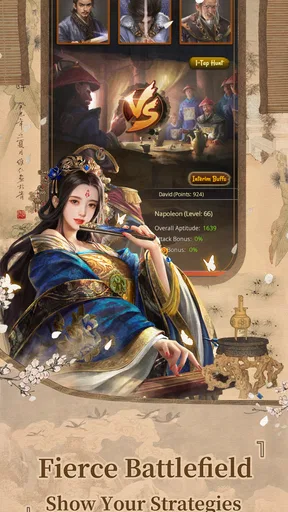
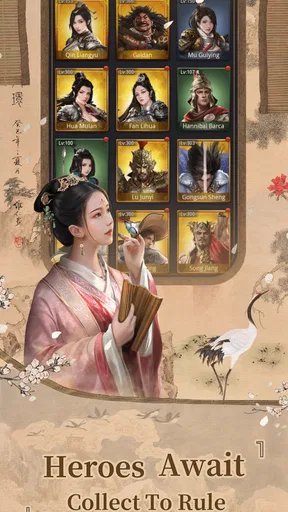
 Analysis by AppCompare
I spent time with Be The King: Judge Destiny as a mobile role-playing game, and my first impression was that it is built around the fantasy of rising into power rather than simply clearing one battle after another. Its promise is easy to understand: you step into a ruler’s world, make decisions, develop your position and work toward becoming the person in charge. That gives it a different rhythm from a traditional action RPG, where reflexes and constant combat usually dominate.
The game is free to download, which makes it easy to try without committing money at the beginning. It is published by Hong Kong Pixel Peak Technology Co., Limited, carries a Teen content rating and has reached over a million installs. Its average rating sits at 4.0 from roughly a hundred thousand ratings, with about fourteen thousand written reviews, so there is clearly an established audience rather than a tiny experimental player base.
My honest view is that this is best approached as a long-term management and progression game with role-playing presentation. It can be enjoyable when I want something I can check in on, make a few meaningful choices in and gradually improve. It is less convincing if I am looking for a fast, skill-heavy adventure with direct control and constant novelty. That difference matters more than the store slogan, because it determines whether the game feels relaxing or repetitive after the first few sessions.
How the current experience feels
I find the current experience easiest to judge when I treat each visit as a small planning session, rather than expecting a full adventure every time I open it. That makes it simpler to notice which choices feel purposeful and which are just routine. With that baseline in mind, the next section looks at how I would approach the game’s established build without assuming every setting needs to be changed.
A ruler-focused role-playing loop
The central appeal comes from playing a character whose progress is tied to authority, judgment and personal advancement. Instead of treating my avatar as a lone fighter moving from one arena to the next, the game frames progression around the wider responsibilities of leadership. That creates a more deliberate mood. I am not only asking whether I can win the next encounter; I am also thinking about which improvement will help my position over time.
That structure suits short mobile sessions. I can open the game with a specific purpose, review what is ready, make a decision and leave without needing to reserve an entire evening. It also rewards players who enjoy seeing several small improvements accumulate. A stronger character, a better-developed court or a more efficient routine can feel satisfying even when no single action is dramatic.
There is a trade-off here. The more the experience depends on gradual progress, the less exciting it can feel when I want immediate control. Players who prefer a console-style RPG with exploration, manual combat and a clear story mission every few minutes may find the pacing too passive. Be The King: Judge Destiny is closer to a persistent progression hobby than a compact adventure campaign.
Worth Reading Before You Choose

EA SPORTS FC Mobile 26 Is a Bigger Football Game, but It Takes Time

Flipboard Shows What News Apps Must Do Beyond the Feed

Switching to Android Auto Means Rethinking Your Driving Routine

Google Calendar Makes a Crowded Week Easier to Manage

Ludo King Makes the Most of the Minutes Between Plans

Baby Panda World Brings Quick Play to Modern Phones, but Its Game Library Feels Busy
Why the presentation matters
The royal setting gives the game a useful identity. Many mobile RPGs rely on familiar fantasy battles, collectible characters or automatic combat as their main attraction. This title tries to make the player feel like a decision-maker. Even when the underlying activity is routine, the framing encourages me to think in terms of status, influence and long-term planning.
That framing also helps explain why the game can appeal to people who normally do not play traditional role-playing games. Someone who enjoys strategy, simulation or management games may appreciate the sense of building a position without needing to master complicated controls. On the other hand, the role-playing label should not make action fans expect deep real-time mechanics. The emphasis is on progression choices and the fantasy of ruling, not on physical skill.
What I would do in a normal day
A realistic use case is a short break during a commute or lunch. I would open the game, collect completed progress, check which upgrade is most practical, handle available decisions and then close it. Later, I could return when another task is ready. This makes it fit naturally into a busy routine, especially for someone who likes games that remain available in the background of the day.
The danger is opening it without a plan and simply tapping through every available prompt. That can make the experience feel mechanical. I found it more rewarding when I treated each session as a small planning exercise: first look at the resource or improvement that matters most, then avoid spending everything just because an option is immediately available. The game is more interesting when I make choices with tomorrow’s progress in mind.
What the current version tells me about its evolution
I read the current version as a sign of an established game, not a promise that its underlying rhythm has changed completely. For a new player, that distinction is useful: it encourages patience while learning the systems, but also makes it sensible to decide early whether the ongoing progression suits your taste. The next section considers what that long-running evolution means for expectations and commitment.
A mature product rather than a new experiment
The current version is 7.8.10103124, while the game first appeared on August 7, 2018. That combination tells me I am looking at a product with a long operating history and a substantial sequence of updates behind it. I would not approach it as a brand-new role-playing release still searching for its identity. The basic ruler-focused concept has had time to develop into a continuing mobile service.
That history is useful for prospective players because it changes the expectations around onboarding and pacing. A mature game often contains more accumulated systems, currencies and progression layers than a newly launched title. The benefit is a larger sense of continuity. The cost is that a newcomer may need patience while learning how the different parts fit together.
I also think the version number should be read carefully. It confirms that the product has evolved through multiple revisions, but it does not by itself prove that every older frustration has been removed. Long-running mobile games can improve their presentation and add content while retaining the same underlying design decisions. In this case, I would expect the current build to represent an established direction, not a complete reinvention of the original experience.
What that means for a new player
Starting now can be appealing because there is likely a broad progression path to explore rather than a small launch package that ends quickly. At the same time, the amount of accumulated content can make the first hours feel like preparation for the real routine. I would give the game several sessions before deciding whether its pace suits me, but I would not force myself to continue if the repeated management cycle already feels like work.
The minimum operating requirement is Android 6.0, which places the game within reach of many older Android devices. That does not guarantee identical performance on every phone, but it does make the entry barrier less demanding than games designed only for recent hardware. If I were installing it on an older device, I would still pay attention to heat, battery use and loading comfort rather than assuming the operating-system requirement tells the whole story.
The effect of long-term design on existing players
For returning players, the main value of a mature version is continuity. A person who enjoys checking progress, improving a position and following the game’s ongoing structure may appreciate having a familiar routine to return to. The title is not trying to be finished in one weekend, and that can be a strength for players who prefer a persistent hobby over a short, complete narrative.
The opposite is also true. Existing users who have already mastered the basic rhythm may eventually judge the game by how much meaningful decision-making remains. If daily activity becomes a sequence of predictable claims and upgrades, the sense of ruling can weaken. The most important question for a long-term player is therefore not whether there is always something to tap, but whether the next choice still feels worth considering.
Spending and the shape of progression
The game is free, but it includes optional purchases ranging from $0.99 to $125.99 per item. That is important context before investing time in a persistent progression game. I would begin as a non-paying player and learn the economy first. That lets me see which improvements are genuinely useful, which rewards arrive naturally and whether waiting feels acceptable before I decide whether spending adds value.
My practical advice is to avoid buying during the excitement of a new milestone. In a game built around gradual advancement, a purchase can feel powerful in the moment but less satisfying once the next bottleneck appears. I would only spend when I understood exactly what problem the item solved and whether it improved the part of the game I actually enjoyed. Players who dislike any pressure around optional purchases should be cautious, even though the initial download is free.
Where the experience still has friction
The biggest limitation is the possibility of routine overtaking role-playing. A royal setting can suggest difficult judgments and complicated consequences, but a mobile progression loop may reduce those ideas to repeated tasks. When that happens, the story or theme becomes decoration around resource management. I enjoyed the concept more when I treated the decisions as part of a broader plan, but players wanting rich character writing may find the emotional depth uneven.
Another issue is the learning curve created by accumulated systems. A long-running game can offer plenty to do, yet abundance is not the same as clarity. New players may need to experiment before they understand which actions deserve attention and which can wait. I recommend resisting the urge to upgrade everything at once. Concentrating on one useful path makes the early experience easier to read and reduces the feeling that progress is scattered.
The game is also not the right choice for someone who wants a fully self-contained purchase. Its free-to-play structure and optional item pricing make it fundamentally different from a premium RPG bought once. Likewise, players who want precise combat input, open exploration or a tightly authored campaign should look toward a conventional action RPG instead. This title’s appeal depends on accepting its slower, ongoing format.
Three habits that make the game easier to enjoy
First, I would establish a session order. Check long-term progress before spending, review the next meaningful objective and only then use available resources. This prevents the common mistake of making attractive short-term choices that leave the more useful upgrade delayed.
Second, I would separate entertainment decisions from efficiency decisions. Sometimes an option is appealing because it fits the ruler fantasy, even if it is not the mathematically strongest move. That is fine when I am playing for atmosphere. If I am trying to advance efficiently, I would make that goal explicit and avoid judging every choice by two conflicting standards.
Third, I would set a personal stopping point for daily play. Because the game is designed around continuing progress, it can encourage repeated checking. A short routine keeps it relaxing; chasing every available action can turn a leisure game into another obligation. This is a small habit, but it makes a major difference in whether the persistent format feels helpful or demanding.
Who should try it, and who should pass?
I would recommend it to players who like mobile role-playing games with a leadership theme, gradual improvement and sessions that can be completed in small pieces. It is particularly suitable for someone who enjoys planning upgrades, watching a position grow and returning to a familiar world over time. The Teen rating also gives a clear indication that it is aimed at an older audience than a children’s tap-only game.
I would suggest skipping it if your ideal RPG is defined by manual battles, exploration and immediate mechanical challenge. I would also hesitate to recommend it to anyone who becomes frustrated by waiting, layered progression or free-to-play economies. A more focused premium game will be a better fit for those players, even if it offers fewer hours of ongoing activity.
What I would watch before committing long term
For a new player, I would watch how quickly the initial sense of choice settles into routine. The first impression may be carried by the royal theme, but the lasting question is whether the management decisions remain interesting after the basic structure becomes familiar. I would also watch whether the game respects my preferred session length. If every visit feels unfinished unless I spend much longer than planned, the format is working against me.
I would keep an eye on how the current version handles the balance between old systems and new-player clarity. The version history suggests ongoing development, but the best evolution for a mature game is not simply adding more layers. Clearer priorities, smoother onboarding and meaningful reasons to return would matter more to me than a larger list of tasks.
After trying it, I see Be The King: Judge Destiny as a specialized mobile RPG rather than a universal recommendation. Its strongest quality is the way it turns gradual progression into a ruler fantasy that can fit around everyday life. Its weakest point is the risk that the fantasy becomes a repetitive checklist. If you enjoy patient advancement and want a free game to revisit in short sessions, it is worth testing. If you need constant action or a finished story, I would choose a different kind of RPG instead.
Overall, I would recommend starting without spending, learning the progression rhythm and deciding based on how much you enjoy the decisions between milestones. The real test is not how quickly you become powerful, but whether the process of governing remains enjoyable once the novelty fades. For the right player, that slower relationship with progress is exactly the appeal.
Pros
- Quick sessions make it easy to play during short breaks.
- Courtroom choices create a satisfying sense of control.
- The medieval setting gives the game a distinctive atmosphere.
- Progression rewards encourage regular daily play.
- Simple controls are accessible for casual players.
Cons
- Repeated decision patterns can make later sessions feel predictable.
- Some upgrades may require considerable time to unlock.
- The game can become repetitive after extended play.
- Frequent ads may interrupt the flow for free players.
- Choices may offer less long-term variety than expected.
FAQs for Be The King: Judge Destiny
What is Be The King: Judge Destiny about?
Be The King: Judge Destiny is a historical strategy and role-playing game in which you manage your character’s rise to power. You handle government affairs, make judgments, recruit followers, develop relationships, and build influence within an imperial setting. The game combines resource management, narrative decisions, character progression, and political strategy, so it is more focused on long-term development than on fast-paced combat.
Is Be The King: Judge Destiny free to download and play?
The game is generally available as a free download, but it may include optional in-app purchases. These purchases can provide premium currency, resources, special items, or progression advantages. You can experience many of the main systems without paying, although progress may become slower as you advance. It is also worth checking the store listing for current pricing, supported devices, and any regional differences before installing.
Does the game require an internet connection?
Be The King: Judge Destiny is designed primarily as an online game, so a stable internet connection is normally required for important features. Online access allows the game to synchronize progress, deliver events, manage accounts, and connect players to competitive or social systems. Some menus may open offline, but you should not expect the complete experience to work reliably without an active connection.
What kind of gameplay can players expect?
Gameplay revolves around making strategic decisions, completing missions, improving your character, collecting and upgrading companions, and managing different resources. You may also participate in battles, court or government activities, alliances, events, and other progression systems depending on the version available in your region. The experience is best suited to players who enjoy gradual advancement, daily objectives, historical themes, and a mixture of automated and decision-based mechanics.
Is Be The King: Judge Destiny suitable for every player?
The game may appeal to fans of historical role-playing and empire-management titles, but it is not ideal for everyone. Progress can involve repeated tasks, timers, energy or resource limits, promotional offers, and frequent event participation. Because the game includes political themes, battles, social competition, and optional purchases, parents should review the age rating and in-app purchase settings before allowing younger players to download it.


